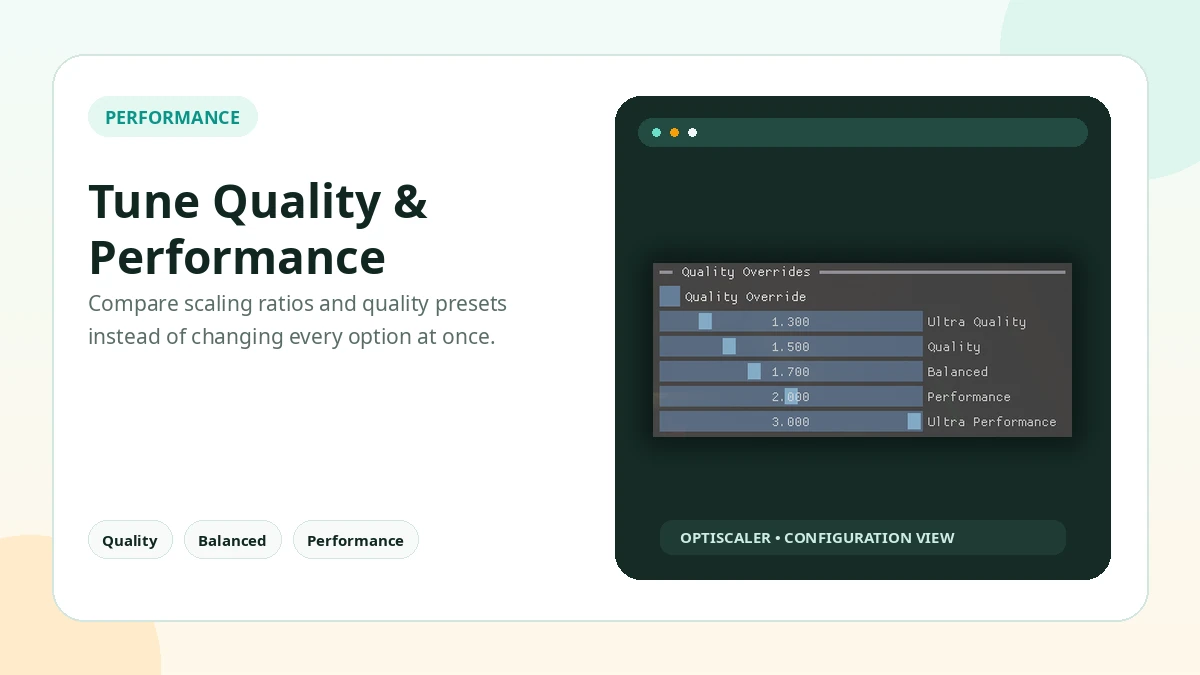
The best OptiScaler settings are game- and GPU-dependent, so a controlled test method is more useful than copying a single preset. Pick one scene, one resolution, and one baseline before tuning — OptiScaler does not improve performance in every game.
Stutter or Performance Loss
Translation, frame generation, shader compilation, or an unsuitable quality ratio can increase overhead. Compare against a repeatable baseline rather than changing multiple settings at once.
Establish a Baseline
Measure native game behavior with the original upscaler and record frame rate, image stability, input feel, and visible artifacts.
Choose the Output Backend
Select the backend you want to test and keep all extra sharpening and frame-generation options disabled for the first comparison.
Adjust the Quality Ratio
Move from higher quality toward more aggressive scaling only when performance gains justify the image-quality change.
Add Sharpening Carefully
Sharpening can restore perceived detail, but too much can exaggerate edges, shimmer, and texture noise. Use small changes.
Practical Checklist
- Record a baseline in one fixed scene before changing any setting.
- Keep original files backed up before changing the game folder.
- Test one setting or backend at a time.
- Avoid anti-cheat protected online sessions.
- Document the working configuration before updating.
Related Guides
Continue with the related guides in the sidebar for setup, compatibility, performance, or safety topics.